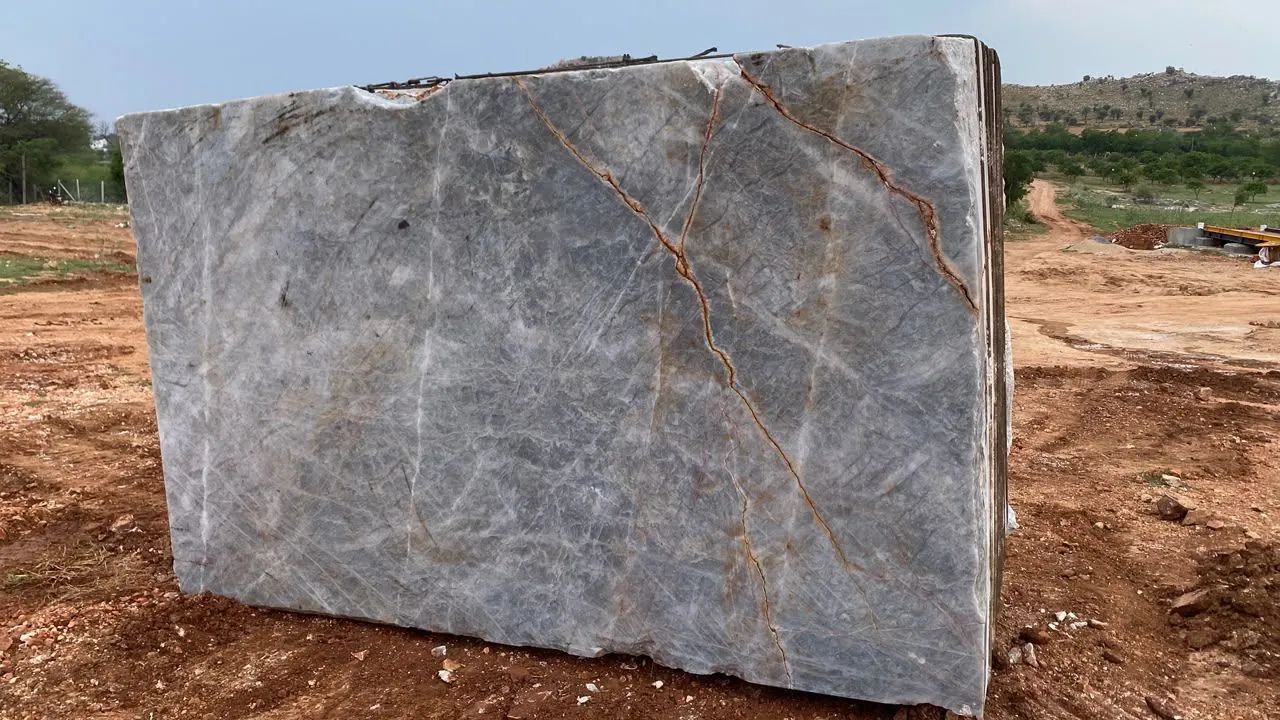
From bench to lorry.
How a block leaves our hill: seven steps, done by the same quarry team for every block, whichever pit it comes from.
Cut at the bench, carried on the belt, loaded and driven away.
-
Read the bench.
Our geologist reads the rock face first: where the colour runs, where the natural joints lie, and where a sound block can be taken out whole.
-
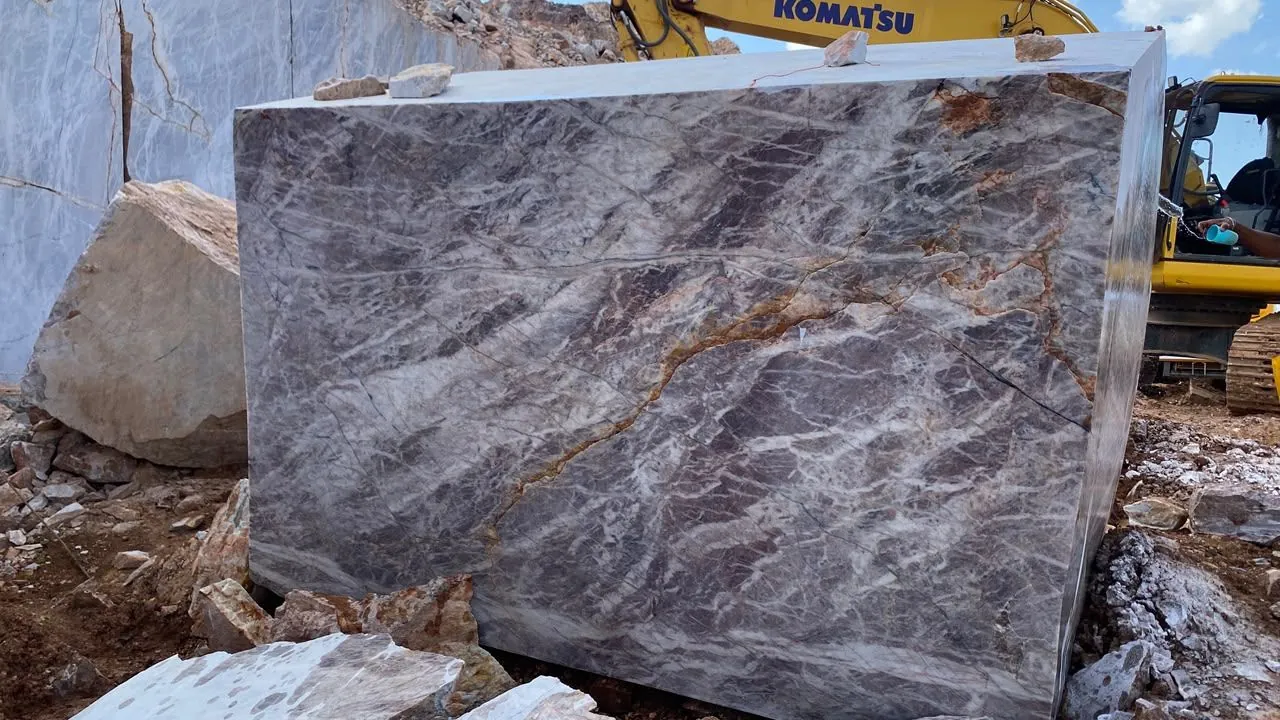
Cut the Block.
The block is split from the bench along the marked lines and lifted clear by crane.
-
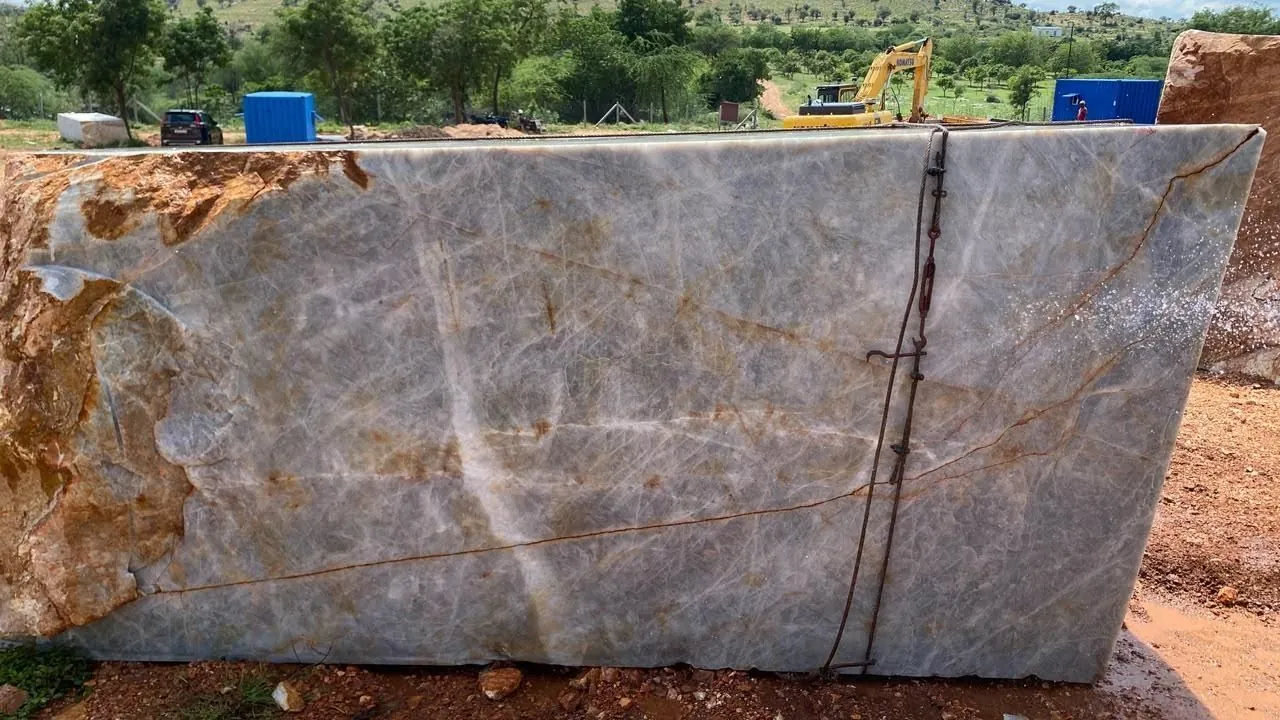
Square and dress.
Rough edges are trimmed so the block sits true. A gangsaw block needs flat, parallel faces; a cutter-size block can be smaller.
-
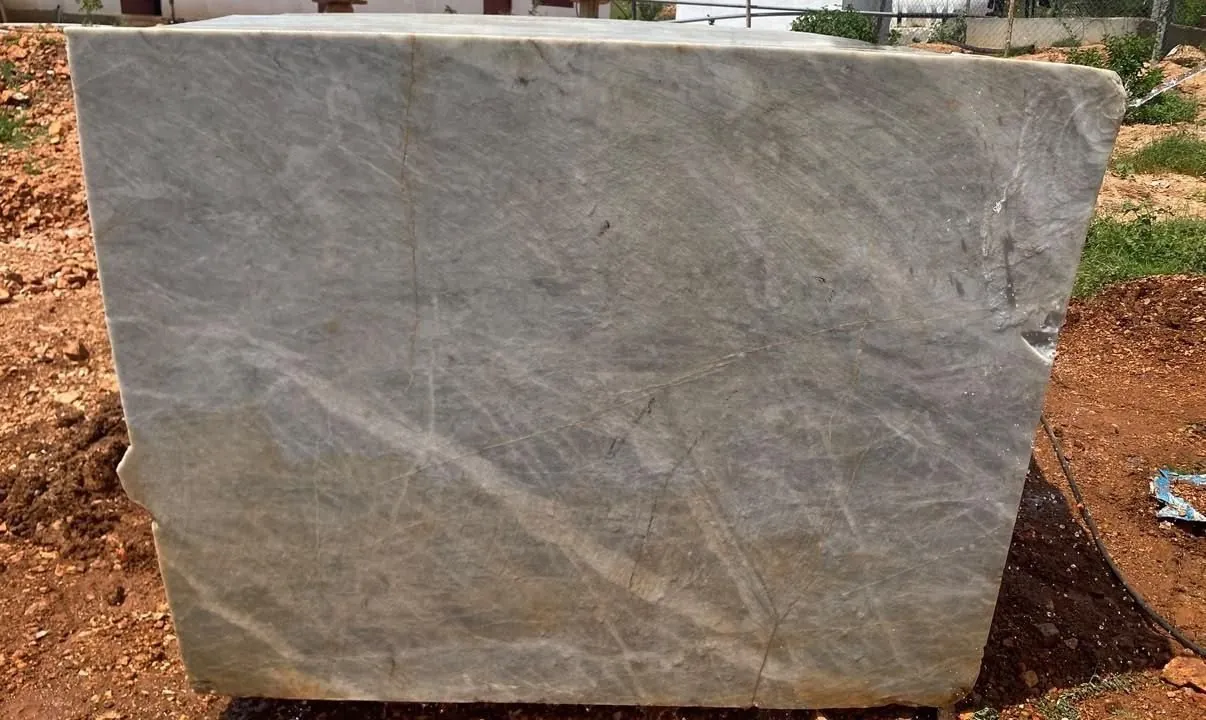
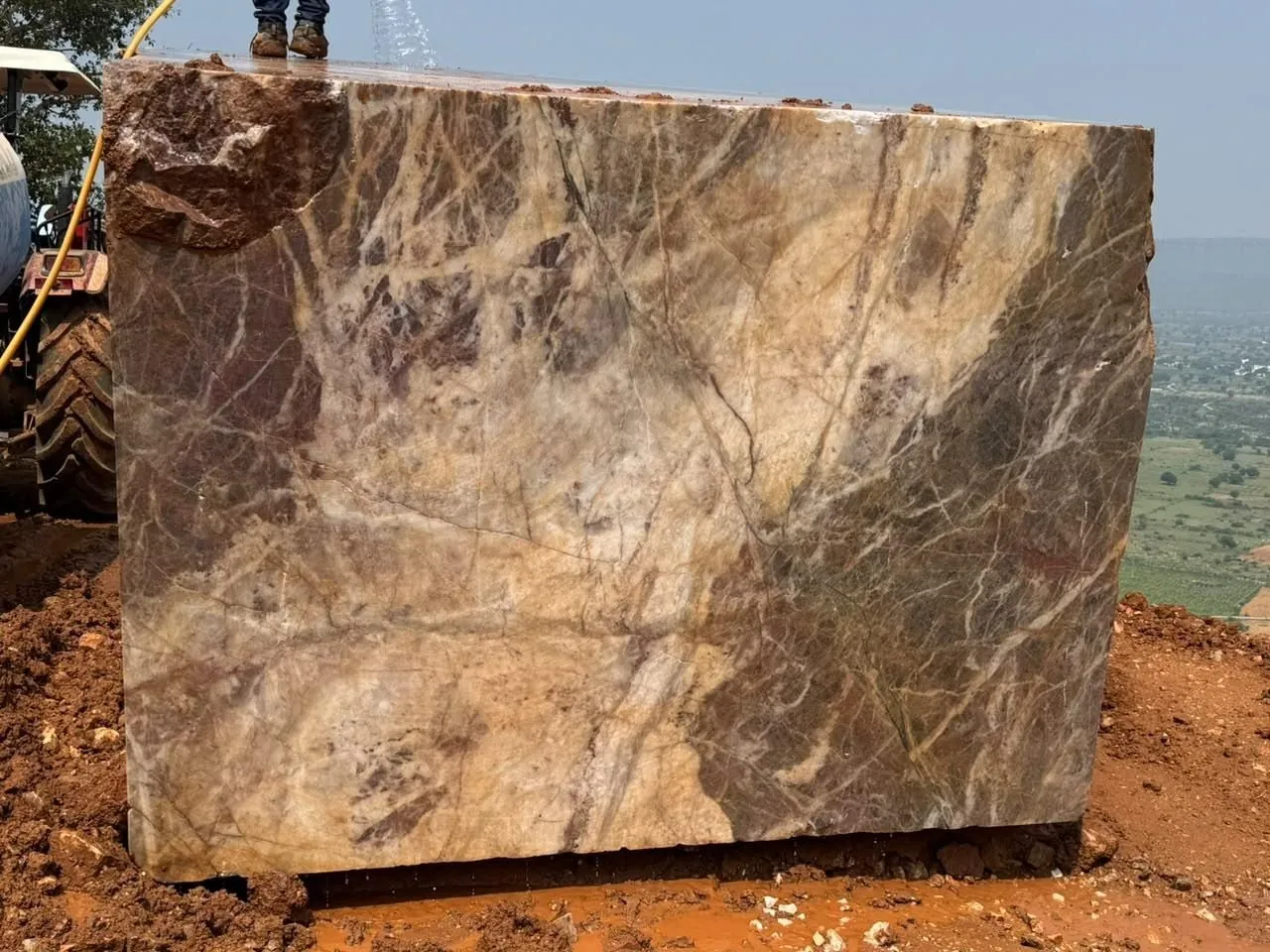
Wash and photograph every face.
Faces are wetted so the colour and veins show as they will after polishing. Then every side is photographed: front, side, top and cross-sections.
-
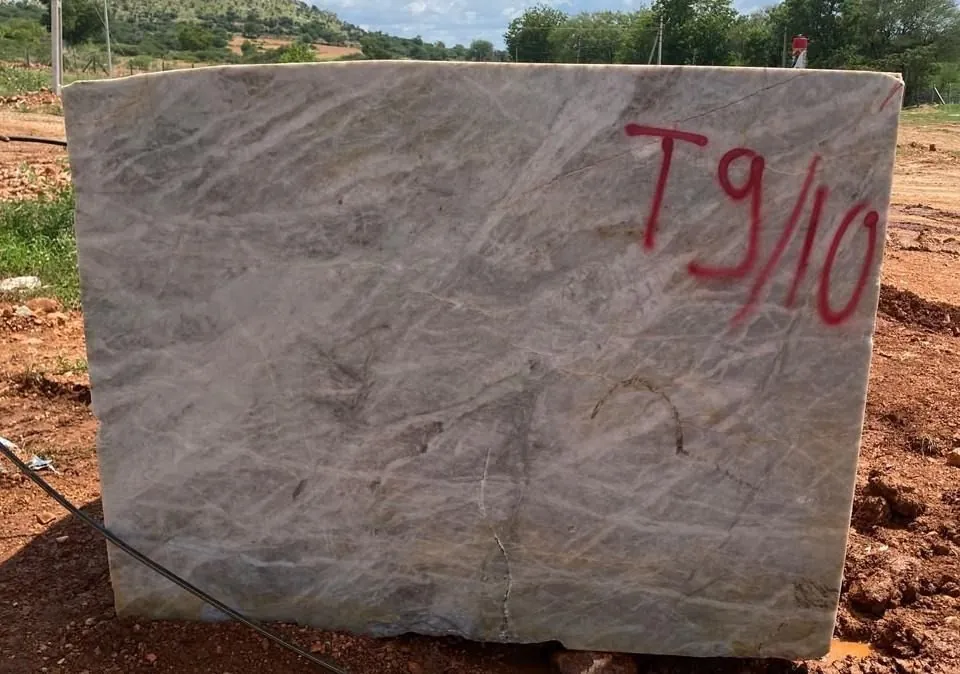
Measure, weigh, tag.
Length, width and height are taped, the weight worked out, and the block’s ID painted on its face. All of it goes onto a spec sheet with the photographs.
-
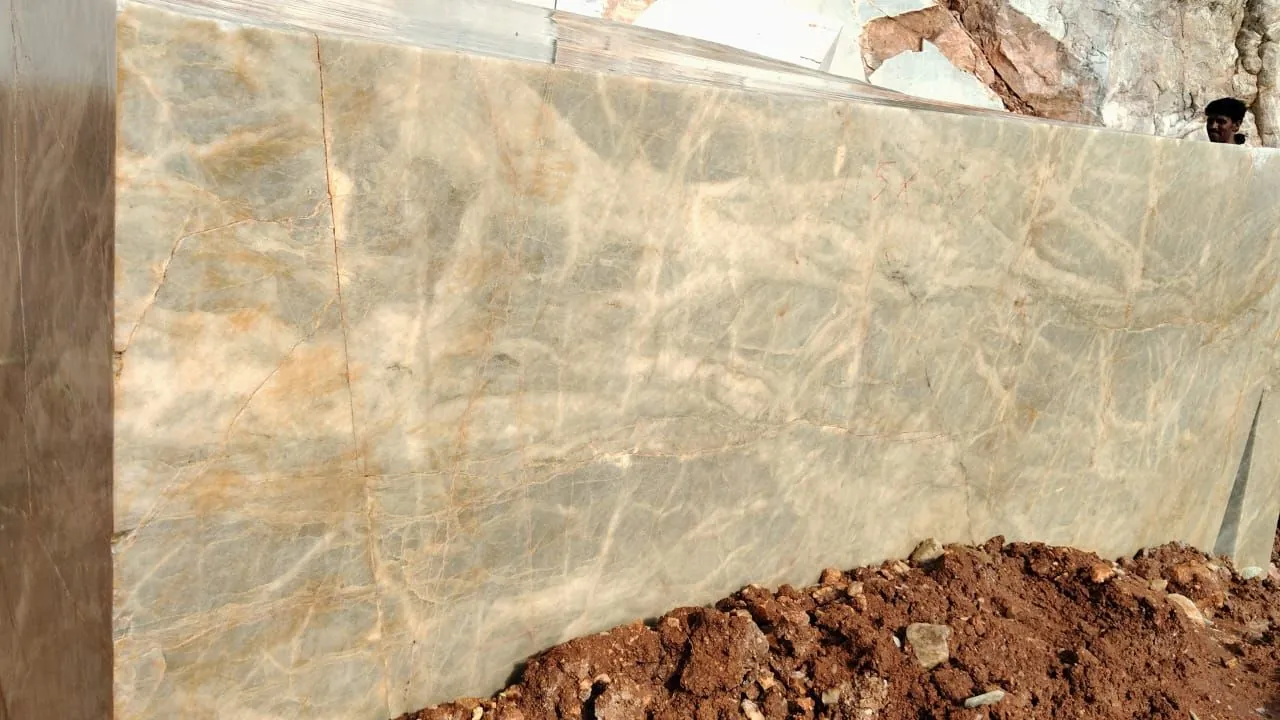
Reinforce when needed.
A block with fine natural lines can be vacuum-reinforced with resin at the pit before it travels, so it cuts cleanly. We tell you when it is worth doing.
Arranged on request, before dispatch.
-
Load and dispatch.
The block is moved to the loading point on the hill and loaded onto the lorry with its ID and spec sheet.